• Who We Are
    • Who We Are
    • Our Mission in Action
    • History
    • Chapters
    • Leadership & Staff
    • Press
    • Sponsors & Partners
    • Contact Us
  • What We Do
    • What We Do
    • Programs & Events
    • Education
      • Education Overview
      • Internship Opportunities
      • Apply Now
    • Preservation
      • Preservation Overview
      • Grant Projects
  • Support Us
    • Support Us
    • Donate Now
    • Support a Project
    • Membership
    • Planned Giving
    • Corporate Sponsorship
  • Skip to table of contents
  • Skip to main content
  • Skip to footer
French Heritage Society

French Heritage Society

Preserving our historic treasures to inspire future generations

  • Who We Are
    • Who We Are
    • Our Mission in Action
    • History
    • Chapters
    • Leadership & Staff
    • Press
    • Sponsors & Partners
    • Contact Us
  • What We Do
    • What We Do
    • Programs & Events
    • Education
      • Education Overview
      • Internship Opportunities
      • Apply Now
    • Preservation
      • Preservation Overview
      • Grant Projects
  • Support Us
    • Support Us
    • Donate Now
    • Support a Project
    • Membership
    • Planned Giving
    • Corporate Sponsorship
  • Who We Are
    • Who We Are
    • Our Mission in Action
    • History
    • Chapters
    • Leadership & Staff
    • Press
    • Sponsors & Partners
    • Contact Us
  • What We Do
    • What We Do
    • Programs & Events
    • Education
      • Education Overview
      • Internship Opportunities
      • Apply Now
    • Preservation
      • Preservation Overview
      • Grant Projects
  • Support Us
    • Support Us
    • Donate Now
    • Support a Project
    • Membership
    • Planned Giving
    • Corporate Sponsorship

Learn More

United States

St. Bartholomew’s Church

Dec 19, 2025
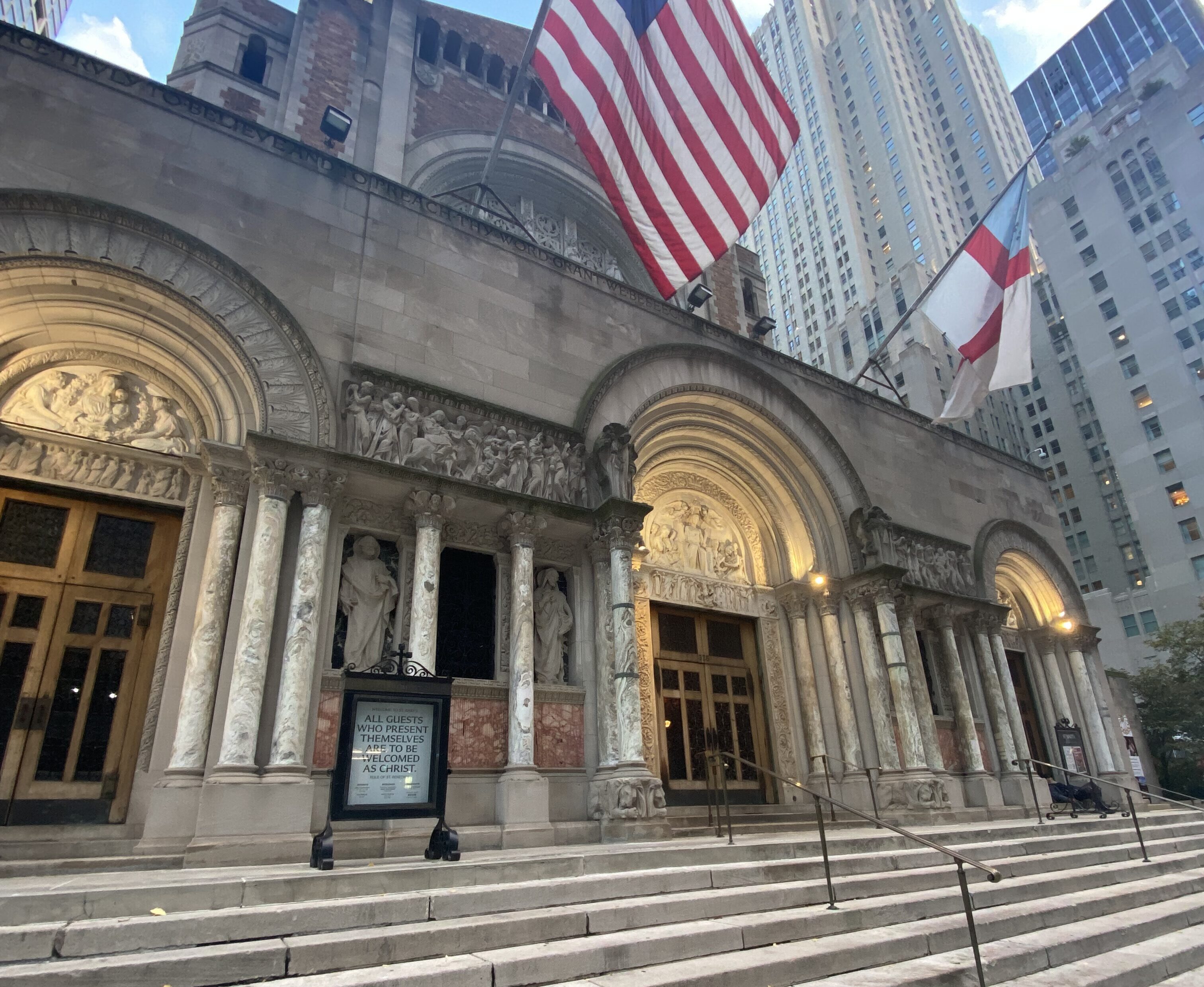
A National Historic Landmark on Park Avenue, St. Bartholomew’s Church is one of America’s greatest architectural ensembles—a Romanesque-Byzantine masterpiece by Bertram G. Goodhue whose monumental entrance, the Stanford White Triple Portal, stands as a singular work of art. Inspired by the 12th-century Abbey Church of Saint-Gilles-du-Gard in southern France, the portal unites architecture, sculpture and […]

St. Bartholomew’s Church

December 19, 2025

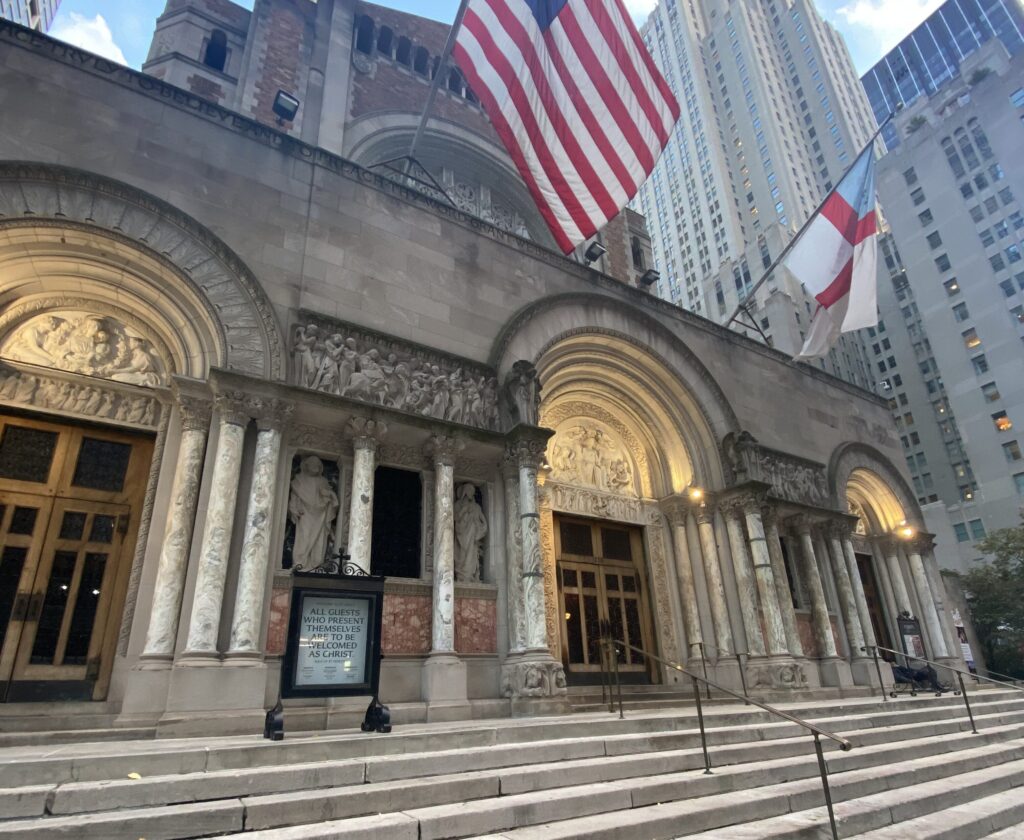
A National Historic Landmark on Park Avenue, St. Bartholomew’s Church is one of America’s greatest architectural ensembles—a Romanesque-Byzantine masterpiece by Bertram G. Goodhue whose monumental entrance, the Stanford White Triple Portal, stands as a singular work of art. Inspired by the 12th-century Abbey Church of Saint-Gilles-du-Gard in southern France, the portal unites architecture, sculpture and color in a composition unmatched in the United States.

Site History

St. Bartholomew’s Church was constructed between 1916 and 1930, with the design by Bertram G. Goodhue incorporating Stanford White’s earlier Triple Portal, originally created in 1901–1903 for the church’s former location on Madison Avenue. Commissioned by Alice Gwynne Vanderbilt and her daughter Gertrude Vanderbilt Whitney in memory of Cornelius Vanderbilt II, the portal features bronze doors made by celebrated sculptors Herbert Adams, Philip Martiny and Andrew O’Connor under the oversight of Daniel Chester French.

When the congregation moved to Park Avenue in 1918, Alice Vanderbilt financed the relocation of the entire portal, which Goodhue called “perhaps the most beautiful thing of its kind in America.” Stanford White’s creation profoundly influenced Goodhue’s design for the church, which features Romanesque arches, Byzantine domes and the dazzling marble and bronze of the portal.

Designated a New York City Landmark and a National Historic Landmark and listed on the National Register of Historic Places, St. Bartholomew’s remains an icon of the American Renaissance and a living testament to the cultural exchange between France and the United States.

About the Project

The red marble wainscoting—with its deep veining and reverse fluting—frames the portal’s central doorway. Its conservation, directed by Amanda Trienens, Lead Conservator and Principal of Cultural Heritage Conservation, will involve cleaning with nonionic detergent and laser methods, replacing unsound previous repairs and filling cracks to restore aesthetic and structural integrity.

This work builds on extensive studies conducted between 2017 and 2023 by the Columbia University Graduate School of Architecture, Planning and Preservation and Excelsior Art Services, with support from French Heritage Society and a National Park Service Save America’s Treasures grant. The project reflects best-practice conservation principles—minimal intervention, maximum retention of original material and long-term maintenance planning.

St. Bartholomew’s Church Today

As an Episcopal church in the heart of Midtown Manhattan, St. Bart’s is an inclusive, radically welcoming Christian community. Its commitment to the arts and beauty is reflected in its robust music program and stewardship of its historic building. In addition to regular services, the church offers a wide range of activities and ministries for children and adults of all ages.
Villa Albertine

Dec 19, 2025
Villa Albertine, headquartered in New York City, is a cultural residence and artistic hub operated by the French government to promote Franco-American exchange. It hosts artists, writers and researchers, providing them with a space to develop projects and engage with the local cultural community. Villa Albertine also organizes public programs, workshops and events that foster […]

Villa Albertine

December 19, 2025

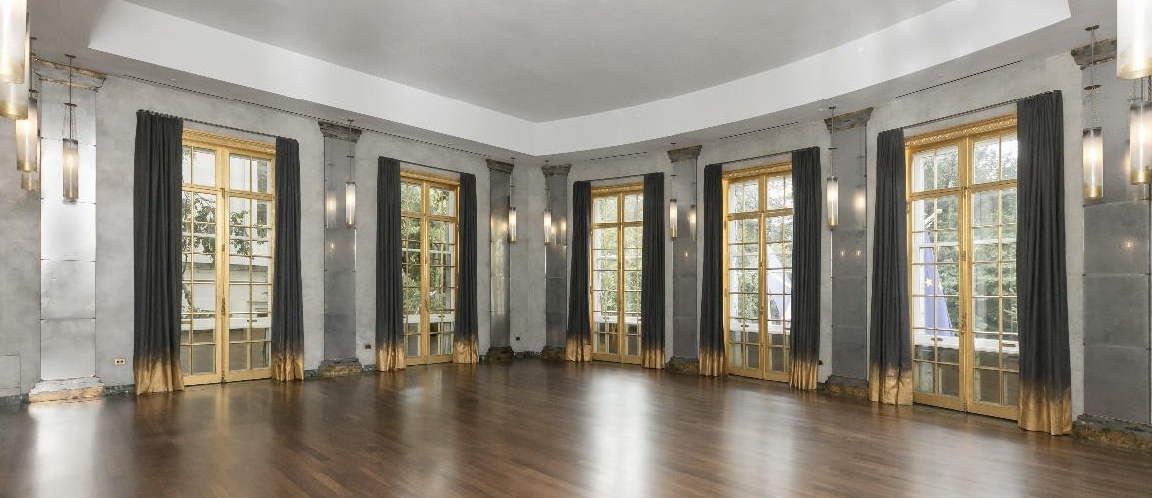
Villa Albertine, headquartered in New York City, is a cultural residence and artistic hub operated by the French government to promote Franco-American exchange. It hosts artists, writers and researchers, providing them with a space to develop projects and engage with the local cultural community. Villa Albertine also organizes public programs, workshops and events that foster dialogue between French and American creative practices.

Site History

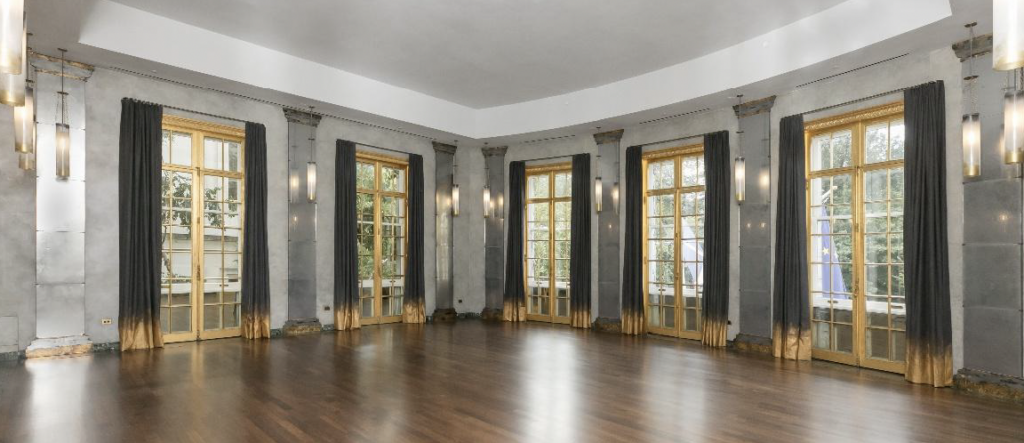
Located on the second floor of the Payne Whitney Mansion, a listed landmark since 1970, the ballroom is one of Villa Albertine’s most emblematic spaces, hosting over 120 cultural and diplomatic events each year. Although restored in 2020, the ceiling was never artistically redesigned, leaving the space without a unifying visual feature.

About the Project

From November to December 2025, a public call for proposals is open to artists and collectives across diverse disciplines, including visual arts, lighting design, scenography and digital arts. The selection process will be led by a jury of artistic, technical and institutional experts, with support from the Centre national des arts plastiques, ensuring both artistic and technical excellence. Priority will be given to the creation of a visually striking ceiling artwork, the integration of discreet and flexible lighting systems and the improvement of acoustics in collaboration with specialized consultants. With approximately 120 events per year, including five ministerial visits, the ballroom offers exceptional visibility in cultural, diplomatic and media contexts, providing a unique platform for the selected artwork.

Expected Outcomes

The project will feature a major site-specific contemporary artwork seamlessly integrated into a landmark heritage setting, while enhancing the technical capacities of the ballroom for concerts, conferences and diplomatic receptions. By supporting this initiative, patrons will be positioned as key supporters of Franco-American cultural diplomacy, gaining visibility at high-profile gatherings. Patrons will be recognized on a dedicated plaque at the ballroom entrance and may also be offered opportunities to host private events in the space.

Lyndhurst Mansion

Dec 19, 2025
Built in 1838 and redesigned in the 1860s by architect Alexander Jackson Davis, Lyndhurst Mansion is a Gothic Revival estate overlooking the Hudson River. Notable residents include former New York City mayor William Paulding, railroad executive George Merritt and financier Jay Gould. Today, the mansion serves as a museum showcasing its architecture, gardens and period […]

Lyndhurst Mansion

December 19, 2025

Built in 1838 and redesigned in the 1860s by architect Alexander Jackson Davis, Lyndhurst Mansion is a Gothic Revival estate overlooking the Hudson River. Notable residents include former New York City mayor William Paulding, railroad executive George Merritt and financier Jay Gould. Today, the mansion serves as a museum showcasing its architecture, gardens and period furnishings.

Site History

Lyndhurst Mansion was built in 1838 by architect Alexander Jackson Davis as a country villa for former New York City mayor William Paulding. In the 1860s, railroad executive George Merritt commissioned Davis again to transform the house into a Gothic Revival masterpiece, adding its iconic turrets, pointed arches, ornate gables and expansive bay windows.

The estate sits on 67 acres overlooking the Hudson River and includes formal gardens, sweeping lawns and a carriage house. In 1880, financier Jay Gould purchased Lyndhurst. He made it his family home, hosting prominent guests from business and society until his death in 1892. Subsequent owners maintained the property, preserving its architectural features and landscape. In 1961, Anna Gould, Jay Gould’s youngest daughter, donated the property to the National Trust for Historic Preservation, which decided to open it to the public as a museum.

About the Project

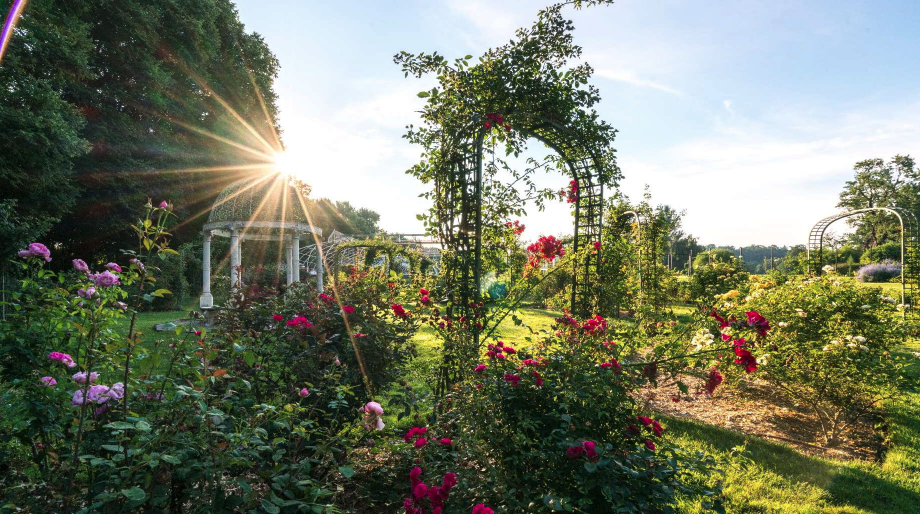
Lyndhurst is undertaking a $5 million campus-wide restoration, with a focus on the northeast quadrant of the estate—home to some of its most significant horticultural features. Among these, the Temple of Love, brought from France by Anna Gould, Duchess de Talleyrand, stands as an iconic element of the rose garden. Inspired by the Temple of Love at Versailles, the structure was installed at Lyndhurst after World War II, when Anna Gould closed her French properties and settled in the United States. It has long been a favorite for visitors and weddings but now suffers from structural instability and damage due to heavy use. The project will conserve and renew this structure to ensure its preservation and enhance the visitor experience. It also seeks to increase spring attendance and expand opportunities for private events.

Lyndhurst Today

Today, visitors can explore the mansion’s richly decorated interiors, original furnishings and collection of period art, as well as its extensive grounds, which feature walking paths, gardens and scenic river views. The mansion also hosts seasonal exhibitions, educational programs, concerts and cultural events, highlighting both its architectural significance and its role in 19th-century American history. Lyndhurst remains one of the most important examples of Gothic Revival architecture in the United States and a landmark of the Hudson River Valley.

Village of Ste Genevieve

May 27, 2025

Village of Ste Genevieve

May 27, 2025

Village of Ste Genevieve

May 27, 2025

Village of Ste Genevieve

May 27, 2025

Voyage of Le Hermione

May 27, 2025

Voyage of Le Hermione

May 27, 2025

St. Bartholomew’s Church

May 21, 2025

St. Bartholomew’s Church

May 21, 2025

Stanton Hall

May 21, 2025

Stanton Hall

May 21, 2025

Rochambeau Monument

May 21, 2025

Rochambeau Monument

May 21, 2025

Vernon House

May 21, 2025

Vernon House

May 21, 2025

Embassy of France in the US

May 21, 2025

Embassy of France in the US

May 21, 2025

Metropolitan Museum of Art

May 21, 2025

Metropolitan Museum of Art

May 21, 2025

La Petite Plaisance

May 21, 2025

La Petite Plaisance

May 21, 2025

Rochambeau Monument

May 21, 2025

Rochambeau Monument

May 21, 2025

Degas House

May 21, 2025

Degas House

May 21, 2025

La Petite Plaisance

May 21, 2025

La Petite Plaisance

May 21, 2025

Beauregard-Keyes House

May 21, 2025

Beauregard-Keyes House

May 21, 2025

Seignouret-Brulatour House

May 21, 2025

Seignouret-Brulatour House

May 21, 2025

La Petite Plaisance

May 21, 2025

La Petite Plaisance

May 21, 2025

Résidence de France

May 21, 2025

Résidence de France

May 21, 2025

Fort de Chartres

May 21, 2025

Fort de Chartres

May 21, 2025

Philadelphia Museum of Art

May 21, 2025

Philadelphia Museum of Art

May 21, 2025

Mount Vernon

May 21, 2025

Mount Vernon

May 21, 2025

Basilica of Ste. Anne de Détroit

May 21, 2025
The Basilica of Ste. Anne de Détroit dates back to 1701 when French explorer Antoine de la Mothe Cadillac and his ensemble of artisans, soldiers, and priests founded the Fort Pontchartrain du Détroit. Site History Among the first structures was a small chapel dedicated on July 26, 1701, the feast day of Sainte Anne. Although […]

Basilica of Ste. Anne de Détroit

May 21, 2025

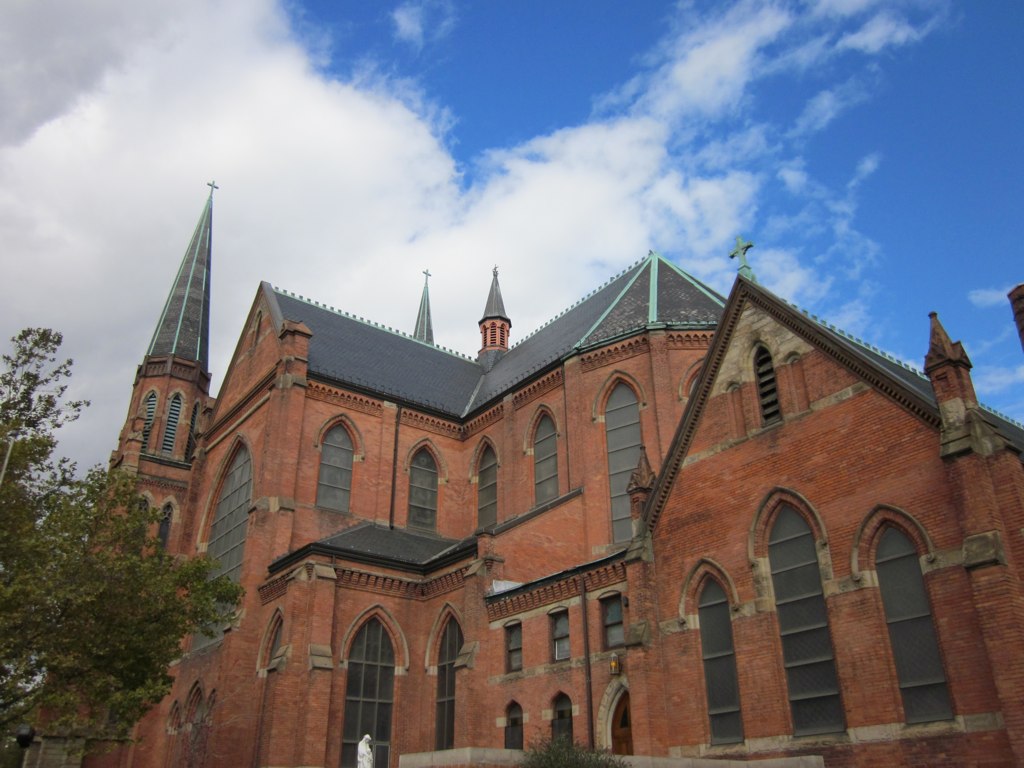
The Basilica of Ste. Anne de Détroit dates back to 1701 when French explorer Antoine de la Mothe Cadillac and his ensemble of artisans, soldiers, and priests founded the Fort Pontchartrain du Détroit.

Site History

Among the first structures was a small chapel dedicated on July 26, 1701, the feast day of Sainte Anne. Although the earliest records were destroyed in a fire, a registry has been maintained since 1704 making Ste. Anne de Détroit the second oldest continuously operating Catholic parish in the U.S.

In 1818, the Basilica was forced to leave downtown Detroit and the new parish complex was built on the western edge of the city directly across  the river from its French daughter parish of Notre de l’Assomption in Windsor, Ontario. The five building complex was built in the hope that the linguistically-besieged community could better survive. The final structure features many artifacts from the original church. Among the items moved to the current building are the 1818 cornerstone, the altar in the chapel, the interior communion rail, the Beaubien Bell, and the statue of Sainte Anne and Mary. Also, the grisaille windows were removed from the earlier church and hold the oldest stained glass found in Detroit.

The basilica has been listed on the National Register of Historic Places since 1976. Former Consul General of France, Guillaume Lacroix, described the complex as “Detroit’s French Historic District.”

About the Project

The restoration of the carillon is the next step in the Basilica’s renovation efforts. It was installed in 1901 to mark the 200th anniversary of Cadillac’s arrival and founding of the Ste Anne de Détroit parish.

The eleven bells in the carillon were each given a proper name following the example of the bells of Notre Dame de Paris. The largest bell, named Sancta Anna, is inscribed with the names of the donors, including many prominent French families who founded Detroit. The second largest Bell, Sancta Maria, prominently includes the name of French-American architect Léon Coquard, who designed the Saint Anne de Detroit church in 1886.

The original mechanism controlling the carillon has not properly functioned for 50 years. The restoration efforts will include modernizing the carillon to function with new technology to control and program a large variety of tunes, controlled remotely by a smart phone. The audio reminder of the heritage of the Strait will resound across the strait symbolizing another step in the renaissance of the city of Detroit.

The Basilica Today

The parish has gone through many changes in its 300-plus years of history. The basilica stands today as an active parish, shrine, historical treasure and landmark in a revitalized, multi-ethnic, bilingual neighborhood.

One February 22, 2011, Pope Benedict XVI named Sainte Anne as the patroness of the Archdiocese of Detroit. In 2013, a building assessment was completed by the Archdiocese of Detroit with an eye toward a future restoration. On April 19, 2017, Archbishop Allen Vigneron decreed Ste. Anne Church to be the official Archdiocesan Shrine to Sainte Anne.

On March 1, 2020 Archbishop Vigneron announced that Pope Francis named Ste. Anne Church a minor basilica. The Basilica of Ste. Anne de Detroit is one of 89 churches in the United States, and only the third church in Michigan, to hold the title of minor basilica. 

  • Page 1
  • Page 2
  • Page 3
  • Interim pages omitted …
  • Page 5
  • Go to Next Page »

Footer

French Heritage Society

New York

14 East 60th Street
Suite 605
New York, NY 10022
+1 (212) 759-6846
fhs@frenchheritagesociety.org

Contact Us

Paris

7 Rue Lincoln
75008 Paris, France
+33 (0) 1 40 70 07 57
contact@frenchheritagesociety.org

Donate

Support Our Mission

By joining French Heritage Society as a member, you help make our restoration work and educational programs possible.

Subscribe to our Newsletter

Privacy Policy
Copyright © 2026 · French Heritage Society · All Rights Reserved