French Heritage Society
Preserving our historic treasures to inspire future generations
Lyndhurst Mansion
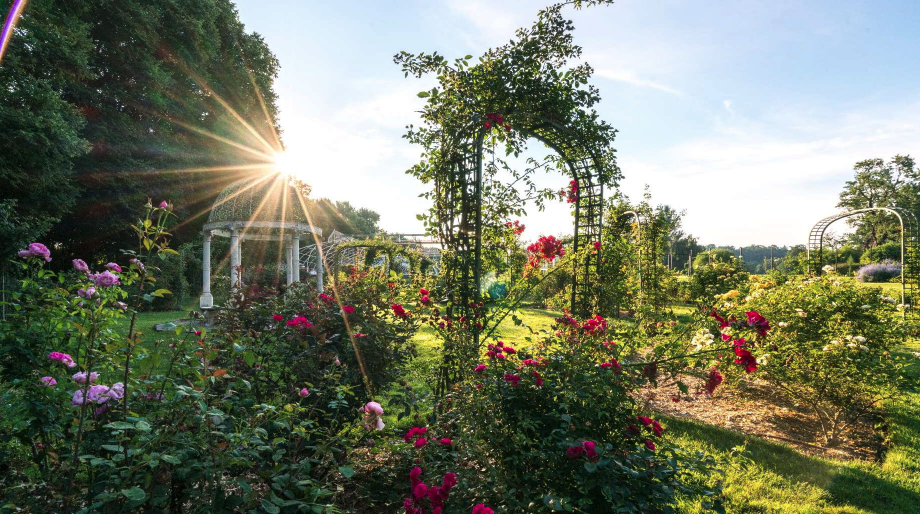
Built in 1838 and redesigned in the 1860s by architect Alexander Jackson Davis, Lyndhurst Mansion is a Gothic Revival estate overlooking the Hudson River. Notable residents include former New York City mayor William Paulding, railroad executive George Merritt and financier Jay Gould. Today, the mansion serves as a museum showcasing its architecture, gardens and period furnishings.
Site History
Lyndhurst Mansion was built in 1838 by architect Alexander Jackson Davis as a country villa for former New York City mayor William Paulding. In the 1860s, railroad executive George Merritt commissioned Davis again to transform the house into a Gothic Revival masterpiece, adding its iconic turrets, pointed arches, ornate gables and expansive bay windows.
The estate sits on 67 acres overlooking the Hudson River and includes formal gardens, sweeping lawns and a carriage house. In 1880, financier Jay Gould purchased Lyndhurst. He made it his family home, hosting prominent guests from business and society until his death in 1892. Subsequent owners maintained the property, preserving its architectural features and landscape. In 1961, Anna Gould, Jay Gould’s youngest daughter, donated the property to the National Trust for Historic Preservation, which decided to open it to the public as a museum.
About the Project
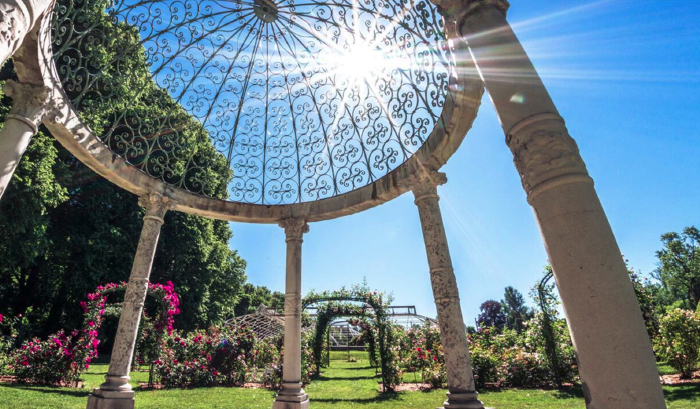
Lyndhurst is undertaking a $5 million campus-wide restoration, with a focus on the northeast quadrant of the estate—home to some of its most significant horticultural features. Among these, the Temple of Love, brought from France by Anna Gould, Duchess de Talleyrand, stands as an iconic element of the rose garden. Inspired by the Temple of Love at Versailles, the structure was installed at Lyndhurst after World War II, when Anna Gould closed her French properties and settled in the United States. It has long been a favorite for visitors and weddings but now suffers from structural instability and damage due to heavy use. The project will conserve and renew this structure to ensure its preservation and enhance the visitor experience. It also seeks to increase spring attendance and expand opportunities for private events.
Lyndhurst Today
Today, visitors can explore the mansion’s richly decorated interiors, original furnishings and collection of period art, as well as its extensive grounds, which feature walking paths, gardens and scenic river views. The mansion also hosts seasonal exhibitions, educational programs, concerts and cultural events, highlighting both its architectural significance and its role in 19th-century American history. Lyndhurst remains one of the most important examples of Gothic Revival architecture in the United States and a landmark of the Hudson River Valley.

Project Initiated
Work Underway
Project Complete
Footer