• Who We Are
    • Who We Are
    • Our Mission in Action
    • History
    • Chapters
    • Leadership & Staff
    • Press
    • Sponsors & Partners
    • Contact Us
  • What We Do
    • What We Do
    • Programs & Events
    • Education
      • Education Overview
      • Internship Opportunities
      • Apply Now
    • Preservation
      • Preservation Overview
      • Grant Projects
  • Support Us
    • Support Us
    • Donate Now
    • Support a Project
    • Membership
    • Planned Giving
    • Corporate Sponsorship
  • Skip to table of contents
  • Skip to main content
  • Skip to footer
French Heritage Society

French Heritage Society

Preserving our historic treasures to inspire future generations

  • Who We Are
    • Who We Are
    • Our Mission in Action
    • History
    • Chapters
    • Leadership & Staff
    • Press
    • Sponsors & Partners
    • Contact Us
  • What We Do
    • What We Do
    • Programs & Events
    • Education
      • Education Overview
      • Internship Opportunities
      • Apply Now
    • Preservation
      • Preservation Overview
      • Grant Projects
  • Support Us
    • Support Us
    • Donate Now
    • Support a Project
    • Membership
    • Planned Giving
    • Corporate Sponsorship
  • Who We Are
    • Who We Are
    • Our Mission in Action
    • History
    • Chapters
    • Leadership & Staff
    • Press
    • Sponsors & Partners
    • Contact Us
  • What We Do
    • What We Do
    • Programs & Events
    • Education
      • Education Overview
      • Internship Opportunities
      • Apply Now
    • Preservation
      • Preservation Overview
      • Grant Projects
  • Support Us
    • Support Us
    • Donate Now
    • Support a Project
    • Membership
    • Planned Giving
    • Corporate Sponsorship

Learn More

France

Maison d’Éducation de la Légion d’Honneur

Apr 24, 2025
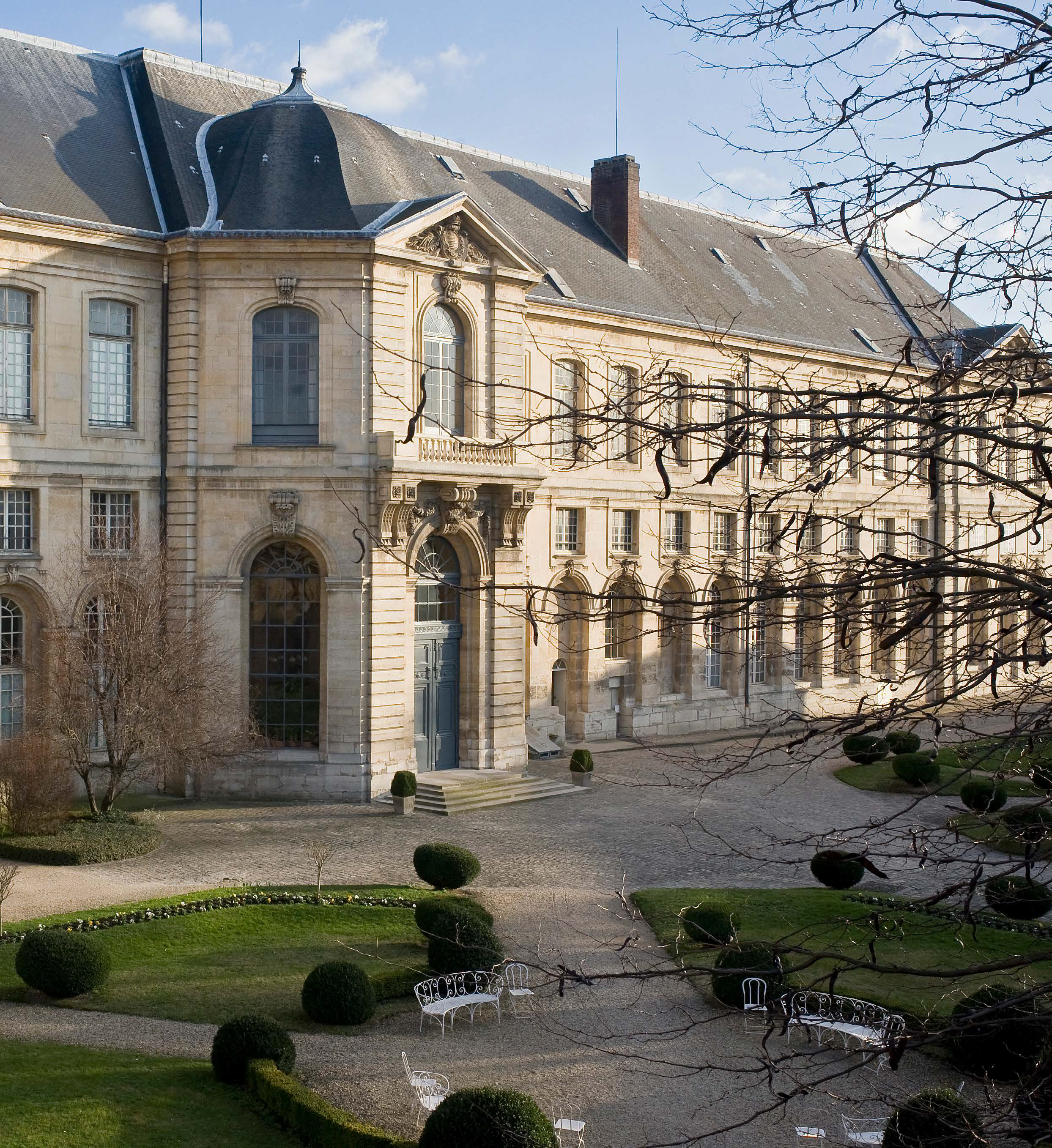
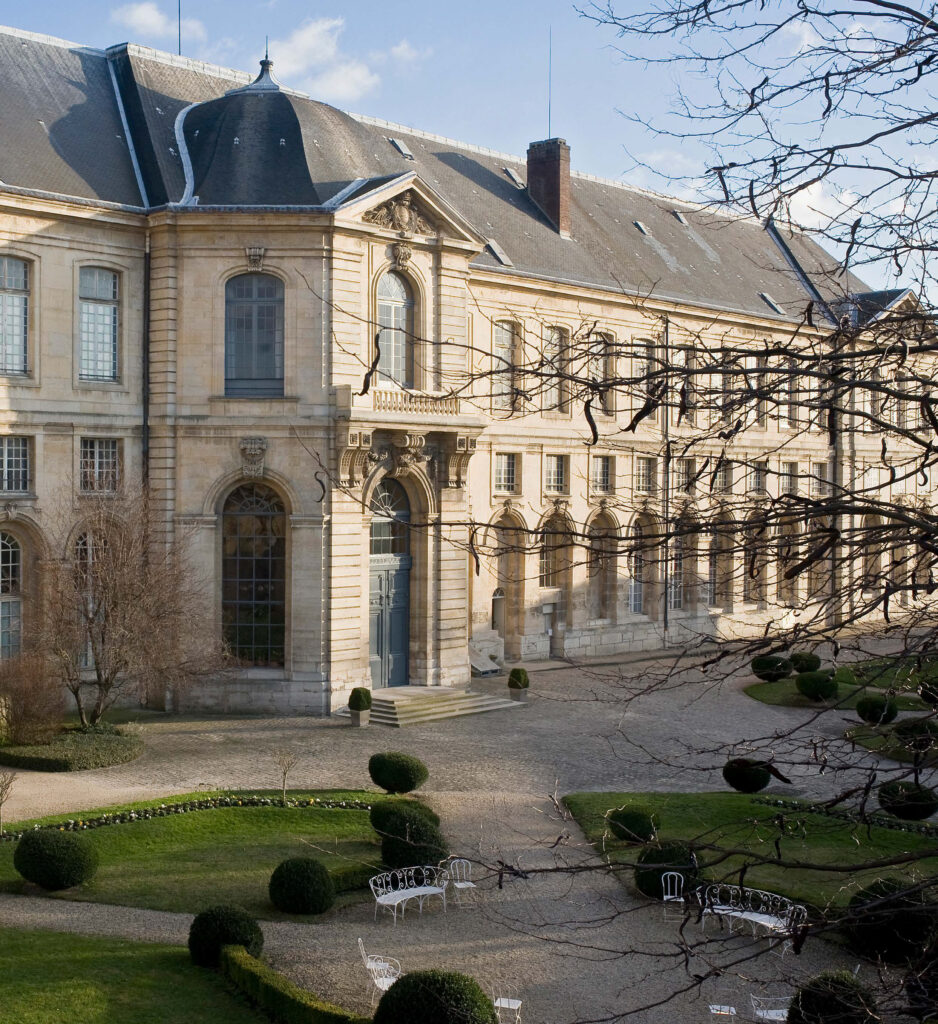
A prestigious girls’ school since the 19th century, the Maison d’Éducation is part of the cloister of the Saint-Denis Basilica, the earliest masterpiece of French Gothic architecture and former royal necropolis. Site History Located in the cloister of the historic Saint-Denis Basilica, the necropolis of the French kings and queens, the Maison d’education de la […]

Maison d’Éducation de la Légion d’Honneur

April 24, 2025

A prestigious girls’ school since the 19th century, the Maison d’Éducation is part of the cloister of the Saint-Denis Basilica, the earliest masterpiece of French Gothic architecture and former royal necropolis.

Site History

Located in the cloister of the historic Saint-Denis Basilica, the necropolis of the French kings and queens, the Maison d’education de la Légion d’honneur is part of a small network of schools created by Napoleon I in 1805 to educate girls whose father, grandfather or great-grandfather had received the Legion of Honor. The first of the schools, the Château d’Écouen, was founded in 1807. Two years later, anxious to fill an educational void for young girls of soldiers fallen in battle, and convinced of the preponderant role that women would have to play in society, Napoleon decreed the creation of a second house of education in the former Royal Abbey of Saint-Denis. 

While tradition attributes the founding of the Royal Abbey of Saint-Denis to Dagobert I, King of the Franks from 629 to 639, the church was likely built in the 5th century, atop the tomb of Saint Denis. King Dagobert had the saint’s relics interred in the abbey and was himself buried there. From then until the 19th century, the abbey served as the place of burial for 43 kings and 32 queens. In the 12th century, the basilica was rebuilt under Abbot Suger, an advisor to Kings Louis VI and VII, leading to the earliest expression of the new Gothic style in 1144. (Before the term “Gothic” came into common use, it was known as “the French style”) During the French Revolution, the tombs were desecrated, and the basilica was used for grain storage. 

In 1809, Napoleon I signed the decree for the installation of the Maison d’education de la Légion d’honneur in the abbey’s old monastic buildings. The school opened in 1811. Shortly thereafter, Napoleon commissioned the architect François Debret to restore the basilica. Debret was eventually replaced by Eugène Viollet-le-Duc, who completed the restoration. 

About the Project

The current restoration work concerns the repair of the roof of the 18th-century Intendant’s wing and the central pavilion, which are very damaged. This work is part of the ongoing restoration of the roofs of the convent buildings carried out over the past 15 years.

The Maison d’Éducation Today

The Legion of Honor’s House of Education continues to educate students at the high school and postbaccalaureate levels. Admission is reserved for the daughters, granddaughters and great-granddaughters of recipients of the Order of the Legion of Honor.

Eglise Sainte-Osmanne

Apr 24, 2025
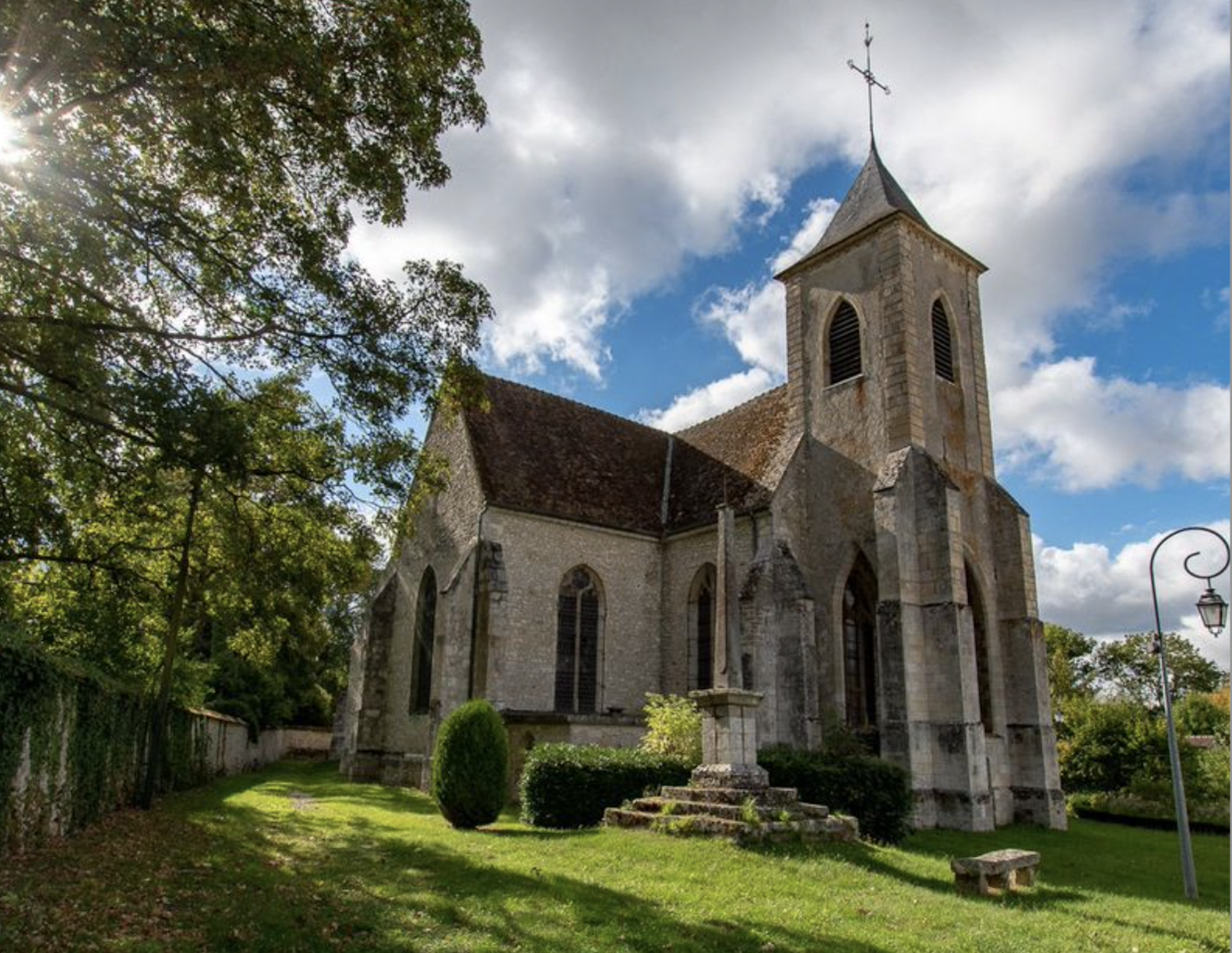
Once a place of pilgrimage, the 12th-century Église Sainte-Osmanne remains at the heart of village life in Féricy.  Site History Dedicated to Saint Osmanna, Sainte-Osmanne Church in Féricy dates back to the 12th century, when the nave was constructed. The church received relics of Saint Osmanna in 1405. Legend holds that upon the arrival of the […]

Eglise Sainte-Osmanne

April 24, 2025

Once a place of pilgrimage, the 12th-century Église Sainte-Osmanne remains at the heart of village life in Féricy. 

Site History

Dedicated to Saint Osmanna, Sainte-Osmanne Church in Féricy dates back to the 12th century, when the nave was constructed. The church received relics of Saint Osmanna in 1405. Legend holds that upon the arrival of the relics, a spring gushed forth in front of the church. The water was said to enhance fertility, and the pilgrimage route to Santiago de Compostela was diverted to Féricy for the veneration of Saint Osmanna. Between 1532 and 1540, a Parisian workshop created stained-glass windows illustrating episodes from the New Testament along with hagiographic scenes of the patron saints of the church. Part of a bay of these windows was exhibited at the Louvre in 2017. The remarkable state of conservation and the artistic and iconographic unity of these stained-glass windows contribute to their exceptional value. 

Queen Anne of Austria had a mass celebrated in the church. On this occasion, water was brought to her from the Sainte-Osmanne spring. After 22 years of sterility, she gave birth to the future King Louis XIV and donated a high altar and a tabernacle in gilded wood to the church. The church was classified as a historic monument in 1930.

About the Project

The Église Sainte-Osmanne is severely damaged and in urgent need of intervention. Holes in the roof cause water infiltration, weakening the structure and putting the building at risk. The restoration project concerns the roofs of the transepts and the choir. The work will consist of replacing roof battens, tiles, and gutters and repairing damage. This project is supported by the municipality and local volunteers. Village life has revolved around the church for several centuries, and residents are determined to keep this beating heart of community alive.

Église Sainte-Osmanne Today

The rural community of Féricy is united around this project, which is supported by the entire municipal council as well as by numerous local volunteers. The latter participate in various activities and events as part of the fundraising campaign and work on communications concerning the project. The church also receives support from l’Association Féricy culture loisirs, which promotes the project within its network and to its members. A volunteer who did her thesis on the Sainte-Osmanne Church, in particular its stained-glass windows, will organize guided tours during European Heritage Days and other events. The publication of a dossier on the church’s history is being prepared.

Château de Sully

Apr 24, 2025
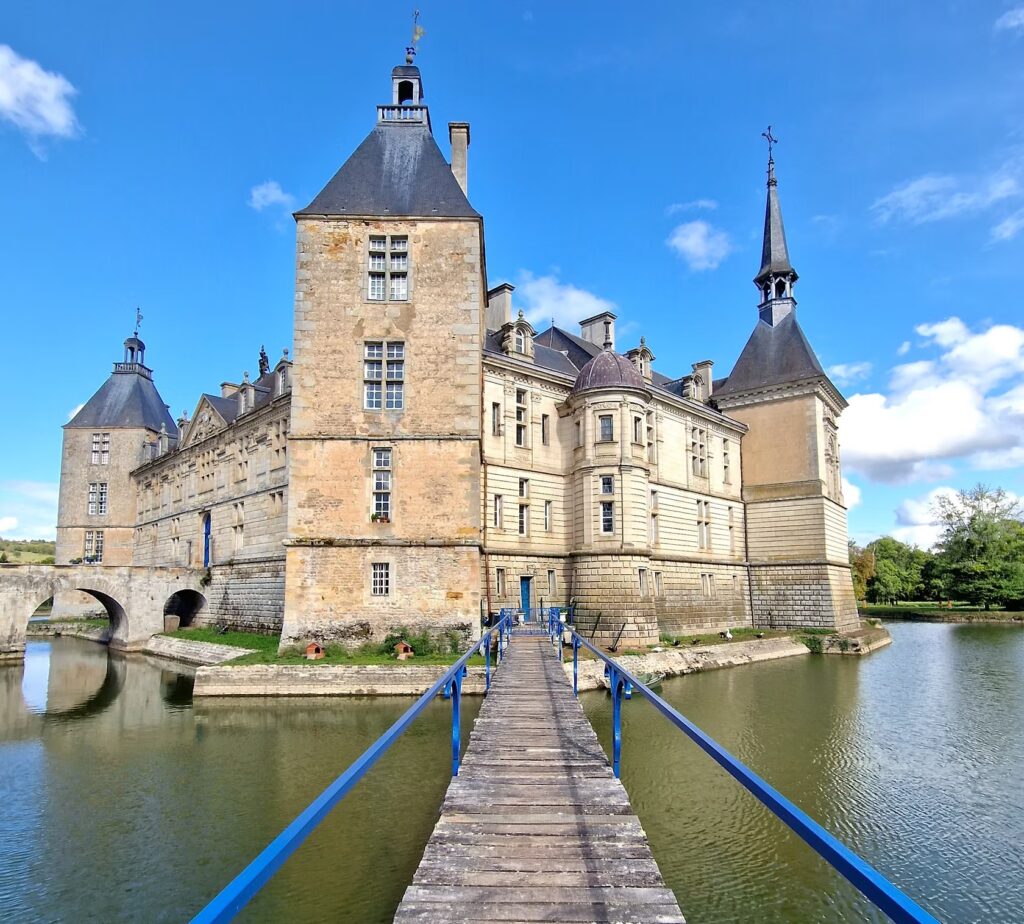
Nestled in the hills of Burgundy, the stunning Château de Sully boasts four distinct façades and a Renaissance courtyard that has been called the most beautiful in France. Site History The Château de Sully is nestled in the rolling hills of the Burgundy countryside, half an hour west of Beaune, on the north side of the […]

Château de Sully

April 24, 2025

Nestled in the hills of Burgundy, the stunning Château de Sully boasts four distinct façades and a Renaissance courtyard that has been called the most beautiful in France.

Site History

The Château de Sully is nestled in the rolling hills of the Burgundy countryside, half an hour west of Beaune, on the north side of the famous Côte de Beaune and its world-renowned vineyards. A moat surrounds the castle, which has four distinct façades. The courtier Roger de Bussy-Rabutin called its main courtyard the most beautiful Renaissance courtyard in France. 

The château as seen today was begun in the second half of the 16th century, following its acquisition by the Saulx-Tavannes family in 1515 (Gaspard de Saulx was an important figure at the court of Henry II of France). The Saulx-Tavannes family fortune lasted for two centuries. Likely due to the vast sums required to keep up with court life during King Louis XIV’s reign, the château was put up for sale for the second time in its history in 1715. One of the most famous subsequent owners, Maréchal Maurice de Mac Mahon, was born at the château in 1808. He became the hero of Emperor Napoleon III’s Crimean and Italian campaigns. In 1873 he was elected President of the French Republic, the only French President to have been born and raised in Burgundy.

About the Project

The restoration project concerns the theater, rare in private châteaux, located in the left wing of the commons after the stables. The theater suffers from humidity and disrepair. It reflects the Empire style of architecture, with elements characteristic of an Italian theater: a parterre, a balcony and a stage area. Intimate in size, it was what was known as a “society theater”: a place of leisure reserved for family and friends. The walls are painted to resemble green veined marble. The ceiling is decorated with foliage and musical instruments and the cornice with palmettes. The red velvet benches are still present, though very threadbare. There are still some beautiful, high-quality stage decorations, along with two Medici vases and antique wallpaper.

Château de Sully Today 

One of the most beautiful châteaux in Burgundy, the winery part of the estate was extensively developed by Philippe, 9th Marquis de Mac Mahon and 4th Duc de Magenta, with the acquisition of the nearby Abbaye de Morgeot. These premier cru vineyards in Chassagne-Montrachet and Puligny-Montrachet enable the family to maintain the château today. Visits to the château, which was classified as a historic monument in 1925, contribute greatly to its upkeep. Since the 4th Duke’s sudden death in 2002, the estate and winery have been run by his widow, the Duchesse de Magenta, who lives at the château year-round with their two children.

Château de Sambucy

Apr 24, 2025
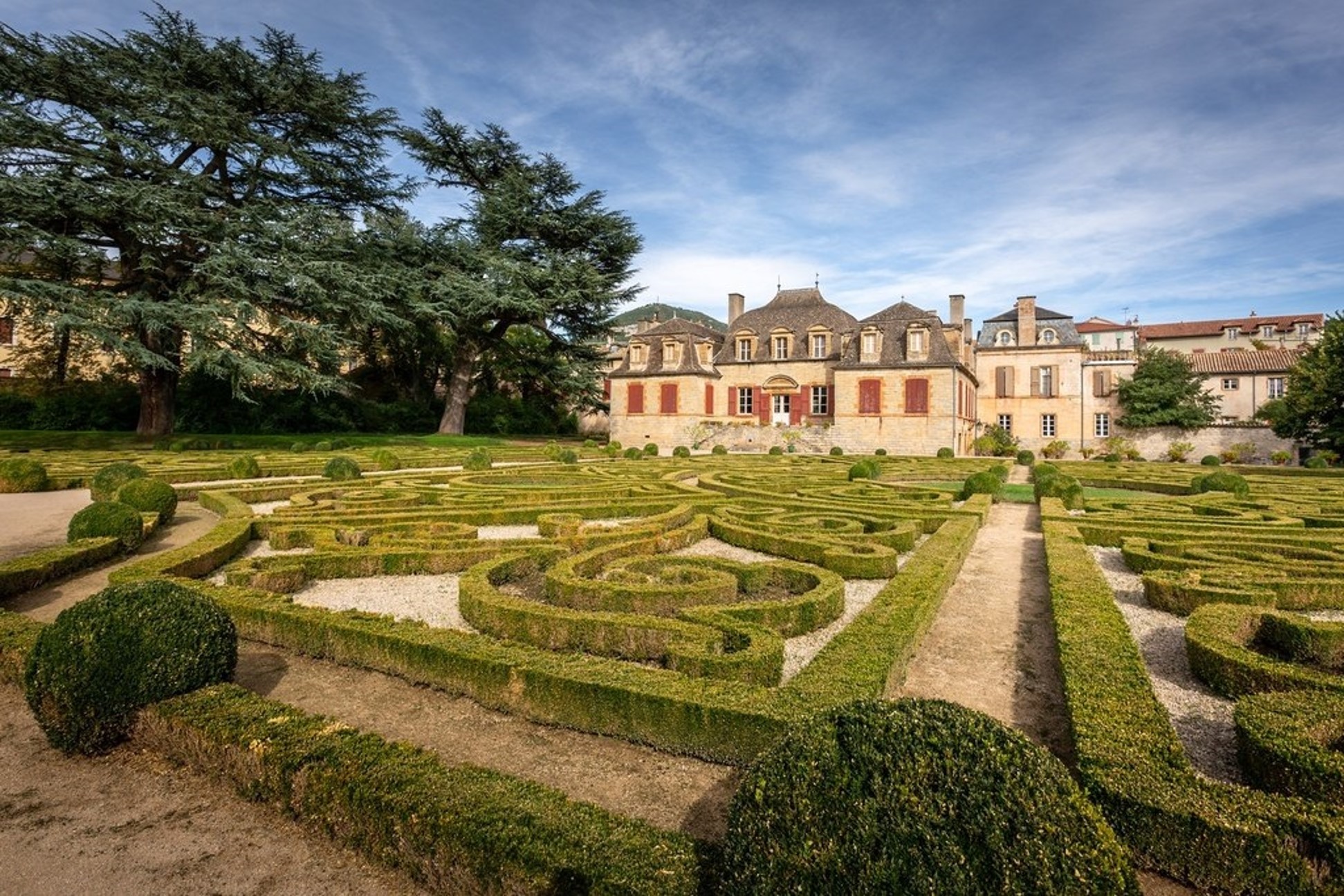
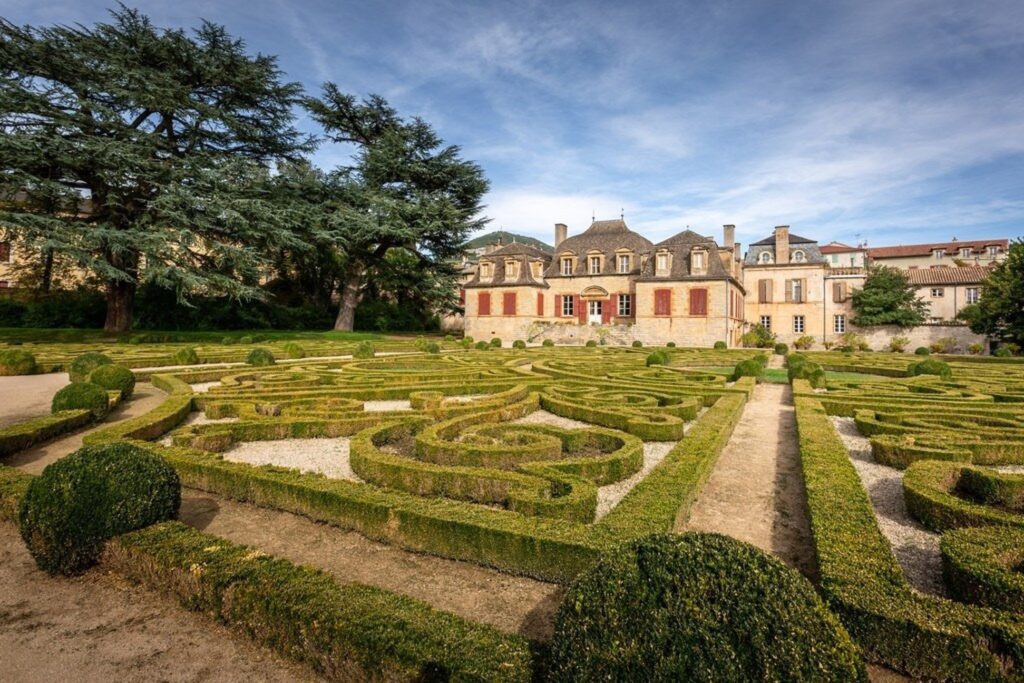
Built as a private townhouse between 1672 and 1674, the Château de Sambucy evolved to include impressive 18th-century frescoes and both French and English gardens, and it remains in the same family today. Site History Between 1672 and 1674, Jacques Duchesne, Advisor to the King and Master of Waters and Forests in the ancient province […]

Château de Sambucy

April 24, 2025

Built as a private townhouse between 1672 and 1674, the Château de Sambucy evolved to include impressive 18th-century frescoes and both French and English gardens, and it remains in the same family today.

Site History

Between 1672 and 1674, Jacques Duchesne, Advisor to the King and Master of Waters and Forests in the ancient province of Rouergue, had a private townhouse built, complete with a French garden. In 1720, it became, by marriage, the home of Marc-Antoine de Sambucy. Between 1730 and 1780, the side wings were built and the French garden extended. The impressive painted frescoes and decorations carved in stucco also date from this period. The period from 1830 to 1850 saw other major transformations, including the creation of an English garden with the introduction of Atlas cedars, as well as construction of the orangery and the last outbuildings. 

The château remains in the same family today. It was listed as a historic monument in 1992 and classified in 1995.

About the Project

The restoration work concerns the porch of the cour d’honneur (courtyard of honor) and stairway of the cour des chevaux (horse yard). Work on the porch consists of removing the steps and stone slabs to purge the backfill of dirt and replace it with an incompressible aggregate. Lime concrete will be used to create a new support for the steps and stone slabs. The stairwell of the cour d’honneur has significant cracks, caused by weakening of the foundations due to the vaulted sewer that runs beneath it. Reinforced concrete pylons will be used to reinforce and restore the foundations.

Château de Sambucy Today

The château has been in the same family since its construction, as the current owner is a direct descendant of the builder. It is essential that this family heritage be maintained and passed down. The château is now fully integrated into the town of Millau, of which it is the main heritage monument, and is central to promoting the heritage and cultural riches of southern Aveyron. Arts and cultural activities help to fund the preservation of this family treasure while transmitting the beauty of the château and its grounds to younger generations. 

The gardens are fully accessible to people with disabilities, and the interiors are partially so. Open to the public from April to October, the site takes part in the Rendez-vous aux Jardins in June and European Heritage Days in September.

Château de La Tourrette

Apr 24, 2025
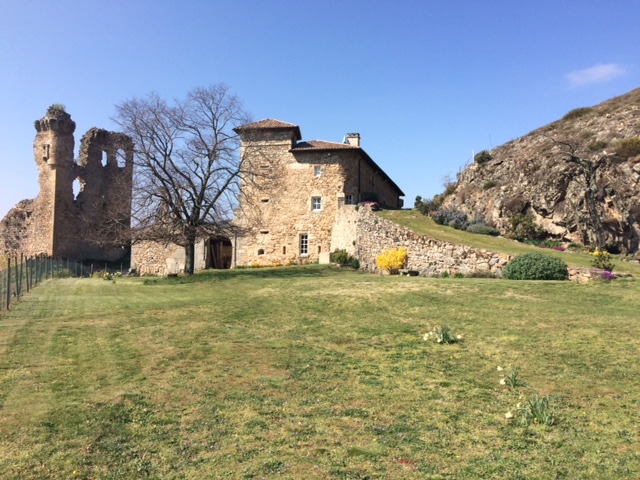
Encompassing a watchtower and fortified house, the impressive remains of the Château de La Tourrette demonstrate the evolution of French defensive structures from the 14th to the 16th centuries.  Site History The impressive remains of the Château de La Tourrette date from the 14th century. The site includes an échauguette (watchtower), as well as a rectangular maison […]

Château de La Tourrette

April 24, 2025

Encompassing a watchtower and fortified house, the impressive remains of the Château de La Tourrette demonstrate the evolution of French defensive structures from the 14th to the 16th centuries. 

Site History

The impressive remains of the Château de La Tourrette date from the 14th century. The site includes an échauguette (watchtower), as well as a rectangular maison forte (fortified house) that incorporates architectural elements from the 15th and 16th centuries. It sits on a high terrace with thick retaining walls and ramparts, in which arrowslits are still visible. The château played an important role during the Wars of Religion, when it served as a prison for Protestants.

The La Rivoire de La Tourrette family sold the château in 1817, and it was used as a quarry. Members of the same family repurchased it in 1848. The remains of the château, including its watchtower, are listed as a historic monument, together with the maison forte, which was restored between 1997 and 2002.

About the Project

The restoration concerns the spiral staircase in the watchtower, which requires restoration in order to be used. The tower was consolidated and elevated close to its original height in 2012–2013. The top of the tower was dismantled in the 19th century, resulting in water infiltration, which led to deterioration of the walls and staircase. Recent consolidation work was not aesthetically appropriate; this will be removed to give the tower its original appearance once the staircase has been restored.

Château de La Tourrette Today

Restoration of the château will protect and preserve it and add to the scenic beauty of this rather remote region, which attracts tourists due to its natural beauty and the harmony of its historic sites. The fortified house is set along a hiking path and accessible to hikers. The château is temporarily closed until necessary restoration work has been completed.

Château de Flaugergues

Apr 24, 2025
One of the oldest “Folies de Montpellier,” the Château de Flaugergues has been in the same family for more than three centuries. Site History Built in 1696, the Château de Flaugergues is one of the oldest “Montpellier Follies,” summer residences of the city’s rich and famous. Its first owner, Etienne de Flaugergues, worked on the […]

Château de Flaugergues

April 24, 2025

One of the oldest “Folies de Montpellier,” the Château de Flaugergues has been in the same family for more than three centuries.

Site History

Built in 1696, the Château de Flaugergues is one of the oldest “Montpellier Follies,” summer residences of the city’s rich and famous. Its first owner, Etienne de Flaugergues, worked on the building for more than 45 years to achieve its final appearance. It is distinguished by its imposing interior and two avant-corps, which are evocative of 16th-century Tuscan villas. The interiors house archival documents, Flemish tapestries from the workshops of Philippe Wauters (active ca. 1670s), furniture in the Louis XVI style and a monumental staircase. 

Listed as a historic monument, the château also features a beautifully landscaped park and listed “Remarkable Gardens.” Since 1972, Henri and Brigitte de Colbert have overseen the revival of the estate, which has remained in the same family for over 300 years.

About the Project

The restoration concerns two statues made of limestone, installed in 1728, representing La paix and L’abondance, similar to those at Versailles. The theme is a classical one, Peace and Abundance being intimately linked. They were sculpted by Jean-Louis Guyon, one of the very few sculptors to sculpt the teeth of his figures, as is the case at Flaugergues. The statues are classified as historic monuments, and their presence is a contributing factor to the landmarked status of the site. They occupy a choice location, situated on either side of the terrace in front of the château. However, they are damaged and in need of restoration. The limestone is, in places, highly eroded or encrusted with microorganisms. There are cracks, cavities and some gaps, and cement filling from a previous restoration needs to be corrected. 

Château de Flaugergues Today

Open year-round, the Château de Flaugergues is an oasis of greenery within the city of Montpellier, 10 minutes from the center as well as the airport, the train station and the sea. The grounds include French-style gardens, an orangery, an English-style park, a “five senses” garden and a bamboo plantation. The 28 hectares of vineyards produce elegant wines that can be found both in the wine cellar and on the table at Folia, the on-site restaurant, led by Chef Damien Fourvel. 

Passebon Cottage

Apr 23, 2025

Passebon Cottage

April 23, 2025

Manoir du Catel

Apr 23, 2025

Manoir du Catel

April 23, 2025

Abbaye de Valmagne

Apr 23, 2025

Abbaye de Valmagne

April 23, 2025

Château de La Roche Courbon

Apr 23, 2025

Château de La Roche Courbon

April 23, 2025

Château de Kerlevenan

Apr 23, 2025

Château de Kerlevenan

April 23, 2025

Chartres Cathedral

Apr 23, 2025

Chartres Cathedral

April 23, 2025

Hôtel Clerjotte

Apr 23, 2025

Hôtel Clerjotte

April 23, 2025

Château de Miromesnil

Apr 23, 2025

Château de Miromesnil

April 23, 2025

Logis Abbatial de Moullins

Apr 23, 2025

Logis Abbatial de Moullins

April 23, 2025

Château du Bois-Héroult

Apr 23, 2025

Château du Bois-Héroult

April 23, 2025

Château de Saint Géry

Apr 23, 2025

Château de Saint Géry

April 23, 2025

Château de Réveillon

Apr 23, 2025

Château de Réveillon

April 23, 2025

Château de Champlâtreux

Apr 23, 2025

Château de Champlâtreux

April 23, 2025

Château de Verteuil

Apr 23, 2025

Château de Verteuil

April 23, 2025

Hôtel-Dieu de Lyon

Apr 23, 2025

Hôtel-Dieu de Lyon

April 23, 2025

Château des Ormes

Apr 23, 2025

Château des Ormes

April 23, 2025

Château d’Ainay-le-Vieil

Apr 23, 2025

Château d’Ainay-le-Vieil

April 23, 2025

Château de La Barben

Apr 23, 2025

Château de La Barben

April 23, 2025

  • « Go to Previous Page
  • Page 1
  • Interim pages omitted …
  • Page 15
  • Page 16
  • Page 17
  • Page 18
  • Page 19
  • Interim pages omitted …
  • Page 23
  • Go to Next Page »

Footer

French Heritage Society

New York

14 East 60th Street
Suite 605
New York, NY 10022
+1 (212) 759-6846
fhs@frenchheritagesociety.org

Contact Us

Paris

7 Rue Lincoln
75008 Paris, France
+33 (0) 1 40 70 07 57
contact@frenchheritagesociety.org

Donate

Support Our Mission

By joining French Heritage Society as a member, you help make our restoration work and educational programs possible.

Subscribe to our Newsletter

Privacy Policy
Copyright © 2026 · French Heritage Society · All Rights Reserved