French Heritage Society
Preserving our historic treasures to inspire future generations
Château de la Villedubois
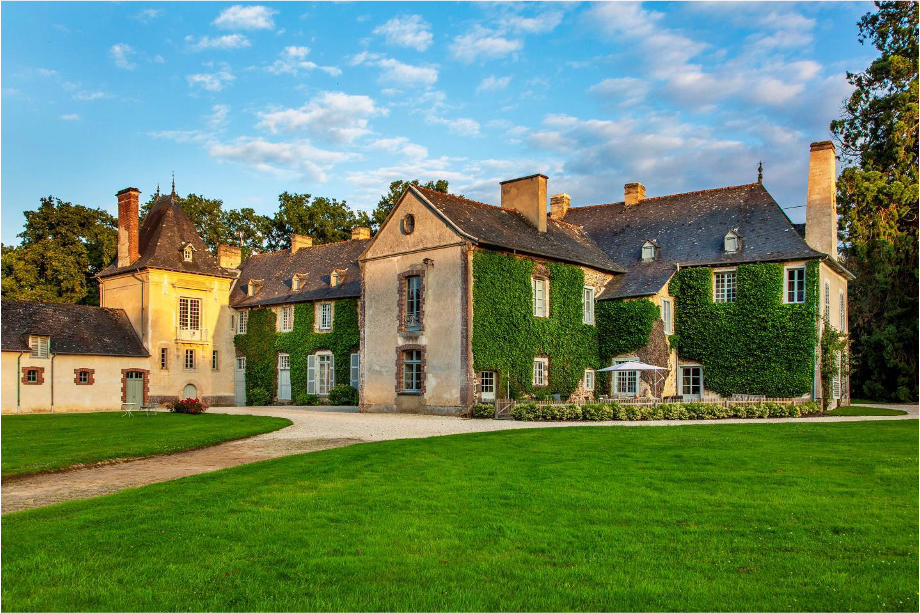
Dating to at least 1379 and in the de Farcy family since 1647, the Château de la Villedubois is a rare example of a Breton estate that evolved from a fortified manorial house into a 19th-century château surrounded by an extensive landscaped park.
Site History
La Villedubois was first recorded in 1379 as belonging to the Chouan family before passing by alliance to other lineages. The de Farcy family acquired it in 1647 and has owned it for 12 generations. The present house retains elements from the late 15th century, notably in the north façade and interiors, and was described in detail in a declaration of 1622.
In the second half of the 19th century, Louis, Count of Farcy, undertook a vast program of modernization: He demolished the basse-cour and replaced it with new farm buildings, moved the vegetable garden, created an English-style park and a new oak avenue leading to the south façade, and remodeled interiors. The library tower was added in the early 20th century.
The estate also includes a dovecote attesting to its seigneurial rights, a chapel rebuilt after 1622 and a preserved painted ceiling from 1660 bearing the Farcy arms. The château, chapel, commons, park and landscape features were inscribed as historic monuments in 2014.
About the Project
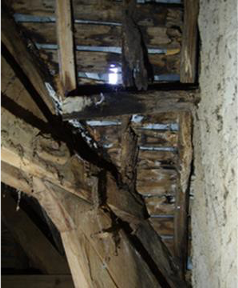
A diagnostic survey carried out in 2023 by Christophe Amiot, Architecte en Chef des Monuments Historiques, identified urgent interventions to restore the dovecote, grange, chapel (including campanile) and northwest wing of the château. These structures are in critical condition, with collapsed or sagging frameworks and failed slate coverings.
The first phase of the project, scheduled for 2025, focuses on restoring the dovecote, chapel roof and northwest wing of the château. It will include dismantling unstable structures, replacing timbers, repointing masonry and complete reslating. Without these interventions, parts of the estate will soon be lost.
Château de la Villedubois Today
Since 2017, Emilia de Farcy and her husband, Allard Hoog, have managed the property with her father through the Société civile immobilière La VDB. They opened the château to the public in 2014 and restored the château’s interiors in 2018–2020. Today, they welcome around 100 visitors annually for guided tours in summer, participate in the Journées du Patrimoine and organize cultural events such as equestrian night shows, storytelling by the fire and foraging walks.
Since 2019, the estate has operated five guest rooms, hosting about 500 tourists annually (70% of whom are international). It can accommodate private events such as seminars, concerts and weddings. Future projects include opening restored outbuildings to schools and developing an “Historial de Bretagne” to present regional history in an engaging way. The planned restoration of the dovecote, chapel and château roof will secure the estate’s survival, enhance visitor reception and sustain its role as both a family home and a cultural hub in Brittany.
Project Initiated
Work Underway
Project Complete
Footer