French Heritage Society
Preserving our historic treasures to inspire future generations
Abbaye de la Clarté-Dieu
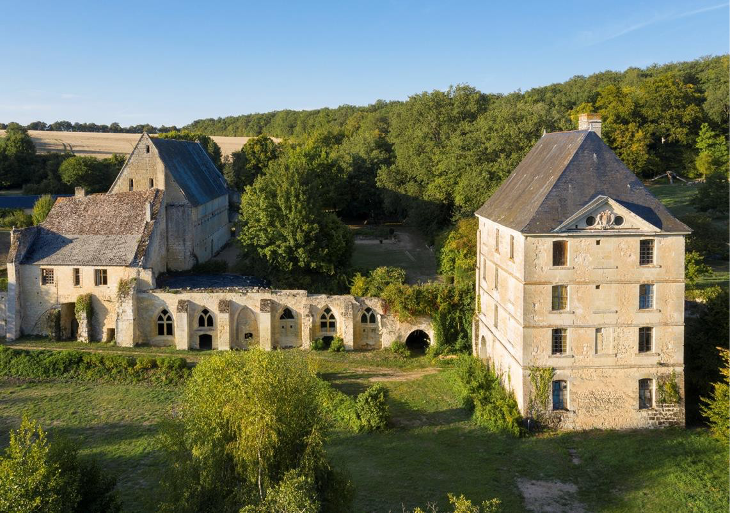
Founded in 1239 by the Bishop of Winchester, the Abbaye de la Clarté-Dieu is a rare Cistercian abbey whose major medieval structures, including the 13th-century lay-brothers’ building with its remarkable timber roof, have survived centuries of upheaval.
Site History
The abbey was founded in 1239 on a site of quarries and marshland, thanks to a donation from Peter des Roches, Bishop of Winchester. Twelve monks and three convers (lay brothers) settled there in 1240, and the abbey was recognized by Saint Louis in 1248 as the 25th daughter-house of Cîteaux.
It suffered heavily during the Hundred Years’ War, particularly in 1364, when it was pillaged and burned. The abbey endured further decline under commendatory abbots in the 16th century, with further damage caused by a devastating storm in 1755; during the Revolution, it was declared national property, and much of it was dismantled and sold off as building material.
What remain today are significant vestiges: the convers’ building, including its 1274–1275 roof structure and the salle basse (lower hall) beneath the refectory; the 18th-century novitiate; and the gatehouse, granges and underground quarries. The site was classified as a historic monument in 2011. Notably, the funerary effigy of its founder, Jean d’Alluyes, was acquired in 1910 by George Grey Barnard and is now in the Cloisters of the Metropolitan Museum of Art in New York.
About the Project
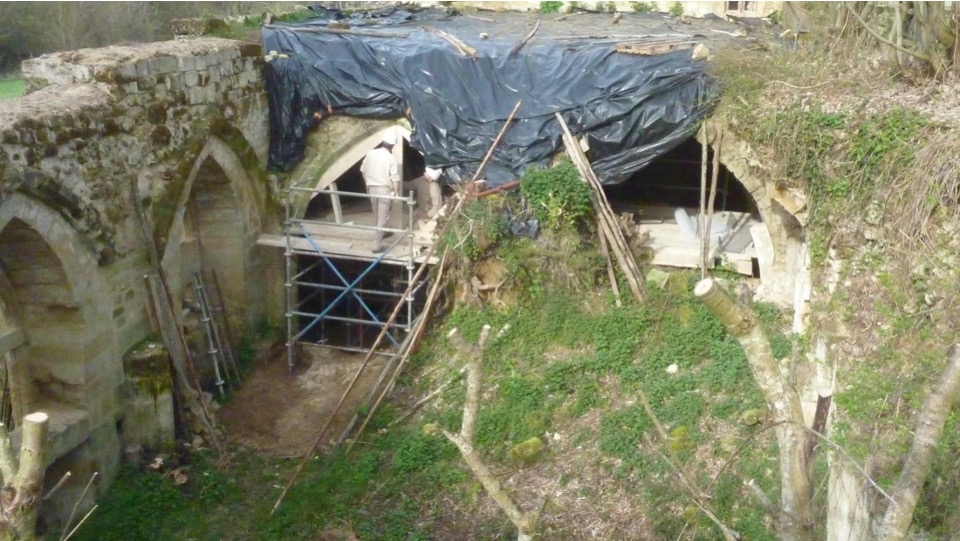
The roof of the convers’ building has no ridge beam and continues to sag despite emergency work in 2017. It is in urgent need of restoration: replacing defective beams and wall plates, straightening trusses, repairing broken elements and reslating. The salle basse, covered for two decades only by tarpaulins, remains propped by temporary scaffolding. Its vaults, columns and masonry are severely weakened, requiring permanent consolidation and a protective roof terrace. Without these works, the structure will not survive further winters.
Abbaye de la Clarté-Dieu Today
Acquired in 2002 by Patrick and Julita Moussette, artists who have made it both their home and atelier, the abbey has been progressively restored and reopened to the public. It welcomes 400–1,000 visitors annually, participates in the Journées du Patrimoine and hosts guided tours year-round. Two associations support its cultural life: les Amis de la Clarté-Dieu, which organizes a classical music festival each July, and les Clartés musicales, which organizes a jazz and world music festival. Exhibitions, workshops and concerts are held regularly on-site.
Despite remarkable progress, the abbey’s survival depends on saving the roof and salle basse of the convers’ building. Their restoration will secure the monument for future generations and allow for expanded cultural programming, exhibitions in partnership with the Centre de création contemporain Olivier Debré in Tours and greater attractiveness for the surrounding region.

Project Initiated
Work Underway
Project Complete
Footer